

When establishing yourself as a real estate photographer it is key that the work that you produce is professional and shows no signs of amateurism. Here we will cover a few of the common errors new photographers make, how they happen and how to avoid them.
1. Converging Verticals/Incorrect Horizontals
This is one of the most common issues with people just beginning to work in real estate photography, Converging verticals and misaligned horizontals are particularly problematic for real estate as the aim of good real estate photography is to give a realistic and pleasing view of the property. Humans like things straight and if things looked crooked, it throws our sub-conscious perception out of balance.
Converging Verticals describes the effect in images when two parallel lines in an image, such as the two sides of a house seem to get converge – as if they are leaning in towards one another at the top.
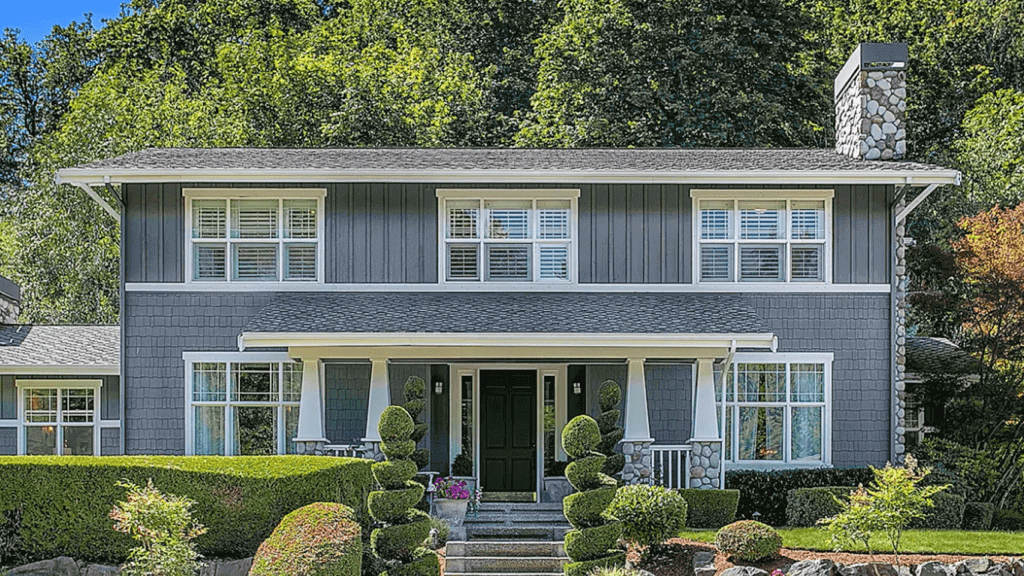
This effect is very apparent when while trying to take the exterior photos you angle your camera up in an attempt to fit the whole structure into the frame. It’s particularly noticeable when using a wide angle lens and while capturing a tall building. This also happens when your camera is not fully level while taking our shot.

Incorrect Horizontals describes the effect in images when the horizontal lines in an image are on different planes. It is particularly noticeable in one point interior shots of the home.

The Fix:

There are 3 keys to dealing with these problems.
- Try to move further back from the home that you’re photographing. This decreases the angle that image is taken from and the more parallel you are to the subject the better. This may require you to stand across the street from the home and you will probably get more of the foreground in your image.
- The next key on site is to use a tripod that contains a tripod head with a bubble level to check each shot or you can alternately use your live view and line up the edges of the photo with edges of the wall and make sure verticals are straight by using shift and tilt modifications.
- The final key comes in post-production. Since, in order to mitigate the converging lines effect, you probably have more of the foreground in the shot than you would prefer to make sure to crop the image accordingly
2. Open toilets
Although it seems obvious, this error comes up oftentimes with new real estate photographers. Leaving the toilet seat open invites the viewer to imagine what might be inside. That is never good.

The Fix:
Obviously, the fix here is to close the toilet seat before taking photos but this error speaks to a bigger overall issue with proper project preparation.

3. Weak Perspectives
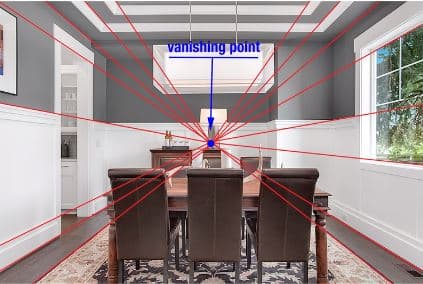
In order to present the best work, all of your shot compositions should show a strong one point or two-point perspective. A one-point perspective is defined as a shot in which all orthogonal lines converge on a single vanishing point.

Most real estate photography is taken with a two-point perspective. Since there are more diagonal lines this is a more dynamic way of composing your shots. A two-point perspective is defined as a shot in which the orthogonal lines converge on two different vanishing points.

The Fix:
Two Point Perspective: Make sure to only capture two walls in your two point perspective compositions. It is always better to let the viewer imagine the third wall rather than have it impinge on the space in your shot. A proper two-point perspective makes the space feel larger, which is key in real estate photography.
One Point Perspective: Make sure to line up your vertical and horizontal lines in your one point perspective compositions. Everyone notices a picture frame that is not properly aligned on their wall so even the untrained eye will notice mistakes here and the photo will look hastily composed and unprofessional.
4. Hot Flash Spots
Hot flash spots like the ones shown below can distract from the important factors of the space and they are also just not aesthetically pleasing. This can happen a number of different ways but the most common cause of this problem is when you are using an on-camera flash and shooting that flash straightforward with no diffusion.

The Fix:
Try using umbrellas to diffuse the light or bouncing your flash off the ceiling or other surfaces for soft fall off light.
5. Bad Tone Mapped HDR
HDR photography can sometimes look overprocessed. While it can be used as a tool for artistic expression it is not something you aim for in real estate photography.This common error occurs because users tend to use invalid settings for tone mapping in post-production. This is common with batch processing of raw images. This can also occur when taking only ambient exposures with no flash or without proper lighting. This can be especially problematic for real estate photography since prospective buyers may be disappointed when they actually tour the home and it doesn’t meet their expectations based on the images they saw online.

The Fix:
In order to avoid this issue, you should make sure to light the space properly. Try mixing your own lighting with ambient light in your shots. In post-production manually edit the image for a quality color balance.
6. Improper White Balancing
White balancing is the process of removing unrealistic color casts so that objects which appear white in person are rendered white in your photo. A telltale sign of real estate photography amateurism is finished photos that don’t accurately represent the true color of the space. Even if the real estate agent doesn’t notice this you can be sure that their client the homeowner will. This typically occurs because there are too many different light sources with different temperatures and there was no flash used to overpower these ambient light sources or the photographer did not properly adjust the white balance in post-production.

The Fix:
Use of a proper flash to overpower multiple light sources and colors and use of post-production software to balance the raw image properly.
7. Lens Distortion
The key to real estate photography is to “keep it real” The use of a “Fish Eye” lens or cheap lenses along with the subject of the photograph being too close to the lens or a lack of proper post-production adjustment techniques can cause your completed work to suffer from lens distortion.

The Fix:
Invest in higher quality lenses as they will pay you back with better end results and happy clients who refer you more business. Make sure the subject is at a proper distance from the subject matter. You also can correct the lens distortion in camera raw or Lightroom by profiling the lens and camera combination.
8. Hard shadows
Hard shadows make rooms look dark which is a bad result since most buyers prefer homes with a lot of light. These shadows can also make walls and ceiling appear stained and dirty.The most common cause of this is something we have covered before; using on-camera flash and shooting that flash straightforward with no diffusion

The Fix:
Try using umbrellas to diffuse the light or bouncing your flash off the ceiling or other surfaces for soft fall off light. You can also manually remove the hard shadows in post-production.
9. Photographer or Camera Reflections

The Fix:
This issue occurs due to improper positioning when taking your shot. If it is impossible to get the right shot without exposing the gear or yourself to a reflective surface you can fix this in post-production with a software such as Adobe Photoshop by using the clone tool.
10. Lack of decluttering the shot

It is important that a real estate listing appear orderly and organized in order to be pleasing to the eye. Although the example below is extreme, it is important to preserve clean lines for your image.
The Fix:
Items such as soap on the sink or remotes on the coffee table take away from the shot. Also be aware and remove any personal photos, garbage cans, security system signs, toys or other uneccessary personal items from the frame.
For more in-depth training on real estate photography follow the links below:
https://www.phixer.net/blog/wrap-up-a-real-estate-photography-shoot/
https://www.phixer.net/blog/photograph-backyards-for-real-estate/
https://www.phixer.net/blog/photograph-living-rooms-for-real-estate/
https://www.phixer.net/blog/photograph-kitchens-for-real-estate/
https://www.phixer.net/blog/photograph-bathrooms-for-real-estate/
https://www.phixer.net/blog/porches-views-and-panoramas-for-real-estate/
https://www.phixer.net/blog/basics-of-hdr-and-flash-for-real-estate/
https://www.phixer.net/blog/how-to-photograph-front-exteriors-for-real-estate/
https://www.phixer.net/blog/photograph-dining-rooms-for-real-estate/
https://www.phixer.net/blog/photograph-bedrooms-for-real-estate/
https://www.phixer.net/blog/camera-settings-for-real-estate-photography/
https://www.phixer.net/blog/basics-of-real-estate-photography/