December 8, 2025
December 8, 2025
Getting residential real estate photography right is essential if you want your listings to stand out on big platforms. If images look cluttered or dim, buyers won’t spot them, and your property will remain on the market longer.
But what are the secrets of residential real estate photography? How can you get it right?
If you want to know, we suggest reading to the end of this guide. You’ll learn how to capture the perfect shot, the editing techniques to use for the best results, and marketing properties through imagery (including what works).
As always, start by learning how to capture the perfect shot. This skill is essential in real estate photography.
As a general rule, always shoot landscapes. Portrait images don’t sell properties as well, and look awkward in most cases.
When holding your camera, bring it between waist and chest level. This height is optimal for rooms and helps to emphasize their features. Lifting the camera too high ruins proportionality.
Sticking to the “three wall rule” is another piece of sound advice. It can help to make spaces seem bigger, giving buyers the impression your property is more roomy.
Keeping vertical lines straight falls into the same category. Leaning walls look unprofessional and create bad first impressions.
Lastly, use bracketing exposures for high dynamic range (HDR) shots. Multiple +2, 0 and -2 exposure levels enable you to create more range in post-processing so you can achieve images that appear truer to life.
If you want to embark on real estate photography, you need the right equipment. Using a smartphone isn’t usually an option.
Most real estate agents use mirrorless cameras these days. These have a sensitive sensor to accurately convert images into digital format. You can also opt for a DSLR if you want to save a bit of money and don’t mind the extra bulk.
As for lenses, we recommend a 10-20mm APS-C and a 16-35mm option, depending on your setup. The latter is full-frame and can look fantastic in the right room.
Other essential items include:
A setup like this usually costs around $2,000. However, you can get budget options (non-video) which are around half as much. The biggest expense is usually the telephoto lens due to manufacturing complexity.

Okay, what about styling your property? How can you get that right?
The first step is to declutter. Removing items from tables and ugly cords from view makes your property look less lived-in.
Of course, if you don’t want to do this these days, you don’t have to. Phixer has AI tools that will remove eyesores for you with the click of a button.
Next, look for quick staging hacks you can use to make rooms and exterior areas feel more welcoming and attractive. Research shows that proper staging can make your home sell for up to 10% more than if you didn’t bother.
There are all sorts of things you can do to stage your home and give it that professional look. These include:
Our final tip is to go room by room, staging in the most appropriate way for the space. Buyers have different expectations depending on the setting, so catering to these can work in your favor.
For example, add white towels to the bathroom. Don’t leave any branded or personal products out.
In the bedroom, make the bed like they do in hotels, using layers of pillows and multiple coverings with the ends folded over. If your nightstands match, that’s even better.
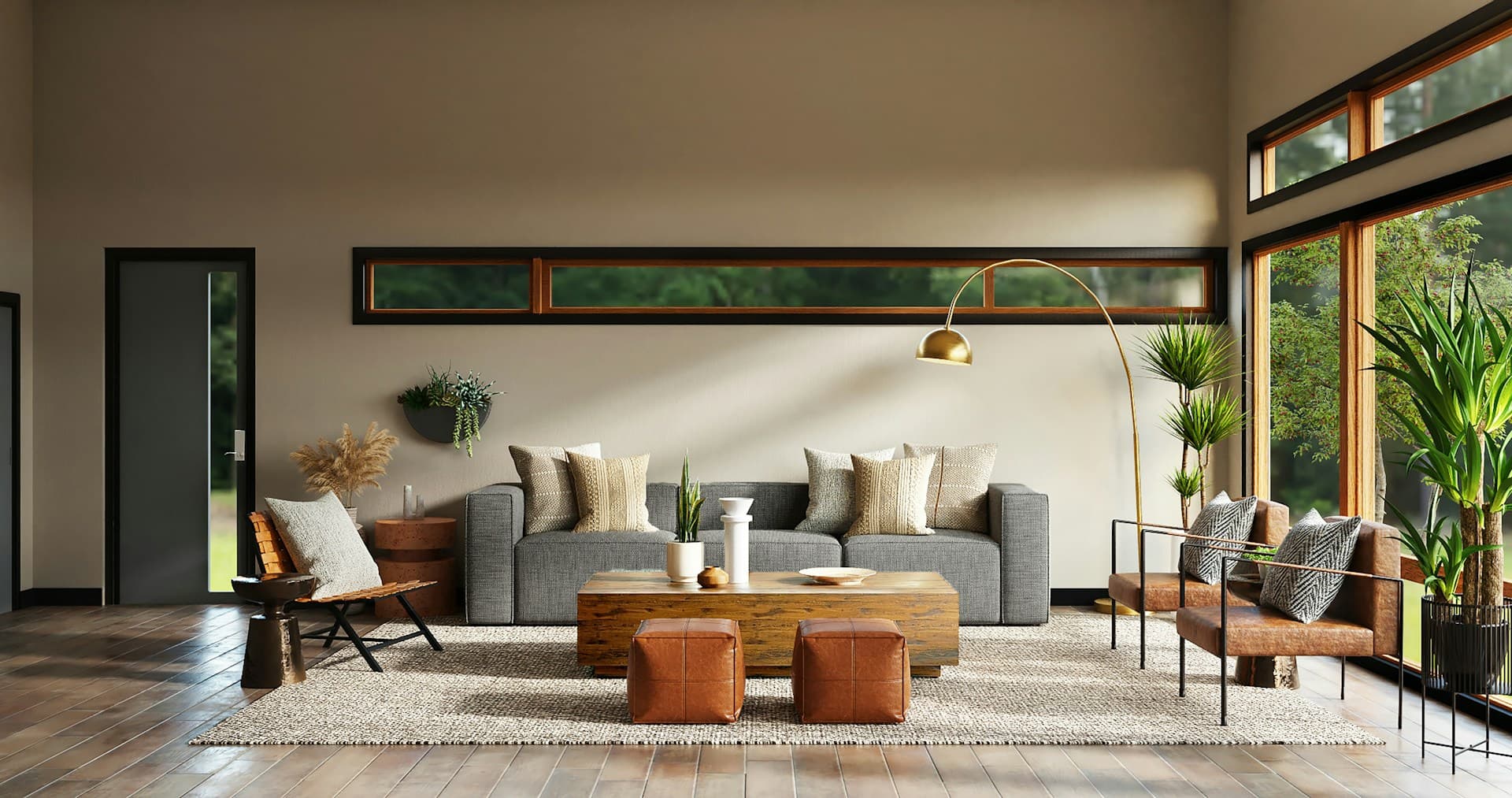
In the living room, try to bring the furniture into the middle of the room. Put down a rug and make the coffee table or the fireplace the focal point. Keep playing until you get it right.
Once you have the photos, the next step is to edit them. This stage is where an AI-powered tool like Phixer can really come in handy, speeding up the process and making your alterations “pop” even more.
Most photographers start with perspective and lens correction. If your photos seem a bit “off,” try playing around with this until it looks right again.
If you see the horizontals and verticals are out of whack, adjust these, too. Make sure your interiors appear formal and not wonky like a haunted house.
If your software tool has HDR merging (if you took multiple exposures) and image sharpening, use these, too. These corrections can transform elements like white balance and reduce noise in pictures, again making them look true to life.
Phixer lets you do more advanced things, like AI sky replacements. If you’re taking pictures on a gray, miserable day, then this feature is essential and only requires clicking one button.
You can also use Phixer to remove clutter and other image artefacts you don’t want, again using AI. See before and after examples on our website.
Whether you use AI tools or not, maximizing natural light in real estate photos is always a good policy. The brighter they are, the better. Homes with more natural light sell faster.
We suggest you start by opening all the blinds and curtains in the home. Allow natural light to flood in from outside, being selective with sun patches. Then, turn off the interior lights. (Doing this reduces color issues).
If the incoming light is harsh, draw any sheer curtains. These will diffuse incoming light while allowing most of it to come through.
If you can shoot on overcast days, that’s even better. Clouds act as a kind of natural softbox, again diffusing light in a way that makes interior and exterior images more flattering.
Another trick is to pull back curtains and shoot straight through the home to the outside. These window shot views put homes in context for potential buyers, helping them make up their minds.
Finally, figure out how to handle rooms that don’t have windows. The best option here is to use multiple natural light boxes (e.g. if photographing a basement). You could also experiment with using a flash and then editing images afterwards to achieve the desired balance of light and dark.
Showcasing unique features is also critical when trying to master residential real estate photography. You want buyers to see the listing and experience that “wow” factor.
Interestingly, the property’s opulence doesn’t matter that much in this regard. All you need to do is focus on anything that stands out in its price category, whether that’s architectural details, crown molding, the fireplace or something else.
If you can shoot these features close up and from interesting angles, that’s even better. The form of the shot tells buyers: “this is something unusual. Pay attention.”
Close-ups work particularly well for materials like naturally-grained wood or copper. The closeness shows off the quality of the material.
Lastly, consider whether drone shots would help sell the property. These work for large lots or homes with unique locations or views over the surrounding landscape.

Residential real estate photography also needs to create an emotional connection. Buyers should feel like you’re telling them a story and that they can picture themselves living in the property.
The best way to do this is to shoot curated lifestyle vignettes. For example, you could add pots and pans to hooks in the kitchen or an open book on a coffee table. These little touches show prospective buyers how they could be using the home.
Twilight exteriors are also a nice touch, especially if the property has exterior illumination lamps. Sometimes, industry professionals refer to these as “the most emotional shots” in real estate.
Lastly, you could try humanizing shots without adding any people. For example, you could leave a steaming espresso on the side when photographing the kitchen or a computer running a screensaver in the home office.
In conclusion, marketing your property through imagery is essential in today’s market. Most buyers will scroll through dozens of listings before finding something they like. Adding 25 to 30 images is usually optimal, but you can include more for keen buyers.
If you want to speed up image editing with AI, use Phixer’s photo editing tools. You can declutter messy living rooms and tidy up chaotic bathrooms, all without the need to stage your property first.
Send us your photos and let our expert real estate photo editors handle the editing — fast, accurate, and ready for publishing.