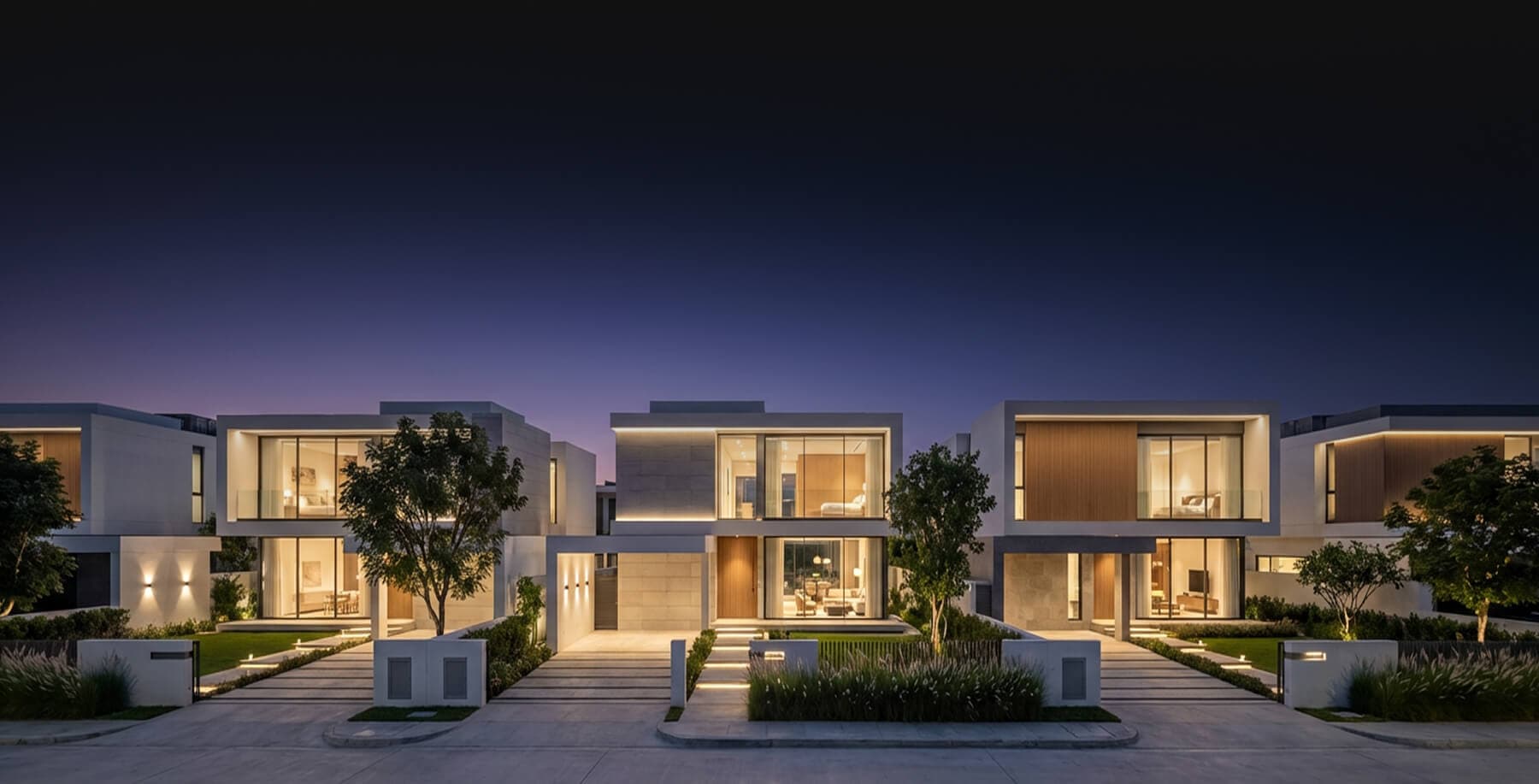
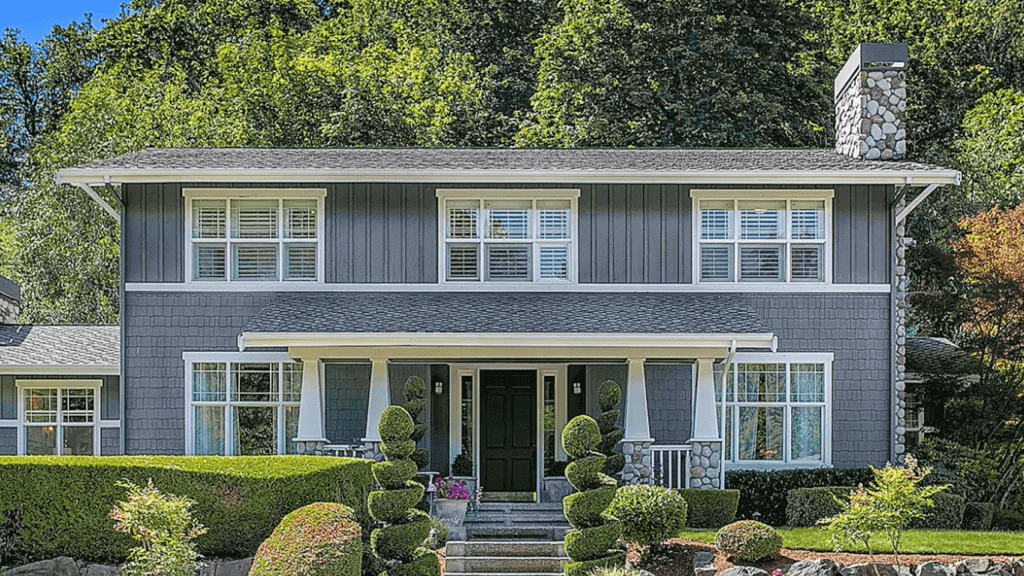

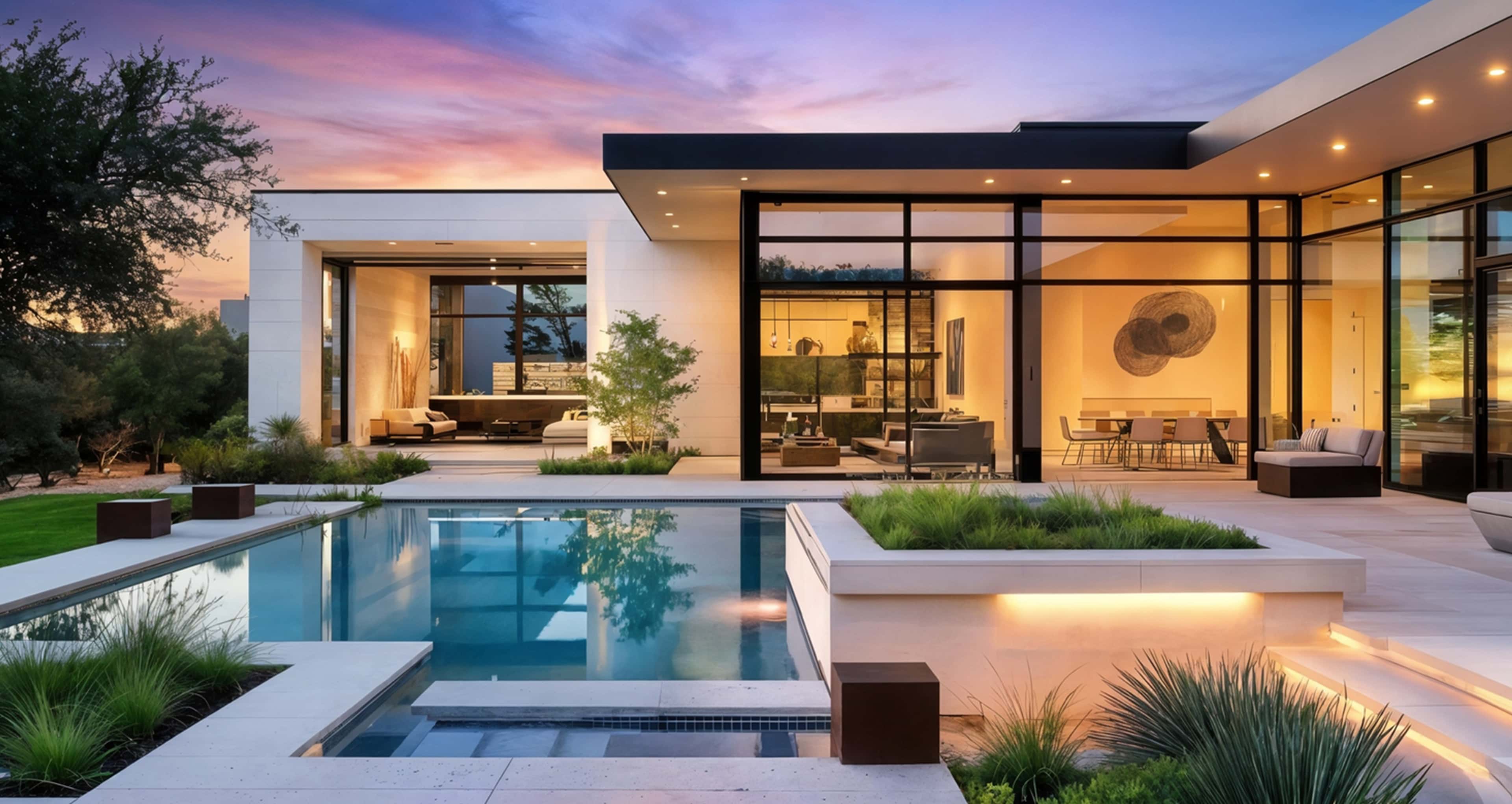
Controlled evening light that defines exterior presence, curb appeal, and arrival without altering reality.
“Light is the one element that defines how architecture is perceived, regardless of form or style.”
Tadao Ando
Architect
Exterior photos carry a different responsibility than interiors. They are often the first images a buyer sees, and they establish expectations before a single room is viewed. Light, sky, and contrast play a disproportionate role in how scale, condition, and atmosphere are perceived at this stage.
Daytime exteriors can flatten form. Harsh sunlight washes out surfaces. Overcast conditions reduce contrast and depth. Late afternoon shadows obscure architectural details. These conditions are common in real-world shoots, especially when listings are photographed under time constraints.
Twilight imagery addresses this limitation by presenting the exterior at a moment when structure, lighting, and environment are most legible. Windows glow, pathways become readable, and the relationship between the building and its surroundings becomes clearer. When done with restraint, twilight does not dramatize the property. It stabilizes how it is read.
At scale, this consistency matters. Exterior images anchor the entire listing. If the first impression feels weak or inconsistent, it colors how everything that follows is perceived. Virtual twilight allows that first moment to be controlled without waiting for ideal conditions.


Daylight was transitioned into balanced dusk lighting, emphasizing architectural volumes and interior glow while preserving natural shadow depth.


Ambient twilight tones were introduced to soften contrast and frame outdoor living areas with a warm, inviting evening atmosphere.


Sky replacement and window illumination were applied to extend visual warmth, improving curb presence without overpowering material details.


Evening lighting was carefully layered to define massing and circulation, guiding the eye through the property with controlled contrast and clarity.
Virtual twilight is effective because it clarifies relationships. Rooflines, openings, materials, and landscape elements become more legible when contrast is controlled and light sources are balanced. The exterior reads as a composed whole rather than a collection of surfaces.
In untreated daylight images, viewers often struggle to separate structure from noise. Bright skies pull attention upward. Reflections flatten depth. Shadows obscure entry points. These distractions make it harder to understand the property at a glance.
Virtual twilight resolves this by introducing a consistent lighting logic. Interior lights establish warmth and occupancy. Exterior lighting defines circulation and entry. The sky provides contrast without overpowering the structure. The result is an image that guides attention rather than scattering it.
Precision matters. Twilight should never feel artificial or theatrical. Color temperature, shadow behavior, and reflections must remain believable. When applied carefully, the intervention disappears, leaving an exterior that feels calm, intentional, and grounded.
The outcome is not a more dramatic image, but a more readable one. One that sets expectations clearly, reinforces confidence, and frames the rest of the listing on stable terms.

Interior and exterior lighting are balanced to enhance form w/o overpowering the scene.
Warmth is introduced selectively so materials and finishes remain accurate and believable.
Skies and reflections are refined to support contrast without distracting from structure.
Twilight edits are applied evenly so exterior images read as a cohesive set.
Edits preserve realism so the exterior feels photographed, not artificially constructed.

Send us your photos and let our expert real estate photo editors handle the editing — fast, accurate, and ready for publishing.